A good pedicure should carry you for weeks. Most people get about half that, and then quietly blame the polish.
Pedicures actually fail differently than manicures. Your feet spend their days in closed shoes, under pressure, in heat, and in this city they are walking considerably more than the average. Almost every cause of an early chip is preventable once you know what you are working against.
It Starts with a Waterless Service
The most common reason a pedicure fails early has nothing to do with what you did afterward. It has to do with whether your feet were soaked beforehand.
When nails sit in water, the nail plate absorbs moisture and expands slightly. Polish is applied over a nail that is temporarily larger than its true size. As that water leaves over the next several hours, the nail contracts underneath a coating that no longer fits it. On toes this is compounded by what happens next: back into socks and shoes, into a warm environment, for hours.
Soaking works against the skin work too. Waterlogged skin is soft and swollen, which makes callus smoothing far less precise. What looks even in the chair often looks less so once the skin returns to normal a few days later. Working on dry skin means what you see is the actual result.
This is why we run every pedicure fully dry at our SoHo studio, with no bowls anywhere on the floor. We go through the full comparison in dry pedicure vs traditional pedicure, and the sanitation case in why waterless pedicures are more sanitary.
The First Few Hours Matter Most
Whatever the service, the hours right after it are when the finish is most vulnerable. A few small choices here buy you a week.
- Wear open shoes for the rest of the day if you possibly can. This is the single easiest win.
- Skip saunas, steam rooms, hot tubs, and long hot baths for the first 24 hours.
- Do not go straight to the gym. Heat, friction, and damp socks are a bad combination on a fresh finish.
- Avoid tight boots or pointed shoes on pedicure day.
Shoes Are the Biggest Variable
After day one, your footwear determines more about pedicure longevity than anything else. Chips on toes are usually pressure and friction, not brittleness.
- Watch the toe box. Narrow or pointed shoes press the polish against the nail edge with every step. Boots are the usual culprit in colder months.
- Rotate your shoes. Wearing the same pair daily means the same repeated pressure on the same two nails.
- Mind the socks. Rough seams and synthetic fabrics catch on edges. Heat and moisture soften a seal.
- Keep length modest. A toenail filed just to the edge of the nail bed takes far less impact than one left long.
Skin Care Is Half of It
A pedicure does not stop looking good only because the polish chips. Just as often it is the skin, and heels are the giveaway. Keeping the skin in good condition is what makes a pedicure look recent at week three.
- Moisturize heels and soles nightly, and skip the area between the toes, which should stay dry.
- Use a pumice or foot file gently on dry skin, a little at a time, rather than aggressively once a month.
- Apply cuticle oil to your toes too. It is the same principle as on hands and almost nobody does it.
- Do not attempt to cut or shave calluses at home. It is easy to go too far and the risk is not worth it.
One note worth taking seriously: if you have diabetes, reduced circulation, neuropathy, or any numbness in your feet, foot care stops being purely cosmetic. Talk to your doctor or a podiatrist about what is appropriate for you before booking or before treating anything at home.
Protecting the Finish
- If you are wearing regular polish, a fresh layer of topcoat every few days genuinely extends the life of it. Gel does not need this and should not be topped at home.
- Never pick at a lifting edge. Peeling takes layers of the natural nail with it, and on toes the damage is slow to grow out.
- Sand, chlorine, and saltwater are hard on any finish. Rinse and re-oil afterward.
- Expect shine to dull before color chips. That is normal, and usually sunscreen or lotion residue rather than a failure.
When to Rebook
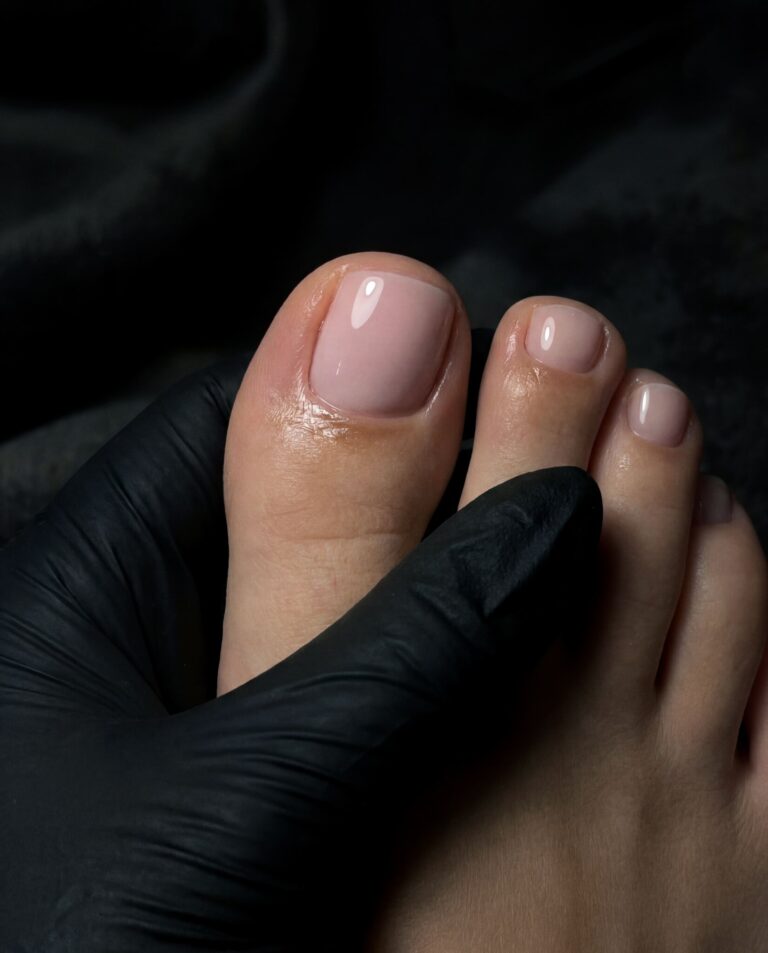
Toenails grow noticeably slower than fingernails, which is why a pedicure often outlasts a manicure by a comfortable margin. Gel on toes in particular tends to hold well, because toes take less impact than fingertips over a normal day.
Four to six weeks is a reasonable maintenance rhythm for most people, though it varies with your growth rate and your shoes. We break the timing down further in how often you should get a pedicure.
The one thing not to do is stretch it well past the point where the finish has already lifted. A gap between product and nail plate can trap moisture underneath, and inside a warm shoe that is a hygiene issue rather than a cosmetic one. Book the removal.
The Studio Matters More Than the Polish
Two people can leave with the same color and get very different results. Precise dry prep, product kept off the skin, careful callus work, properly sterilized tools, and an unhurried removal are the fundamentals that decide whether you get ten days or a month. If you are weighing studios, ask how they prep and how they sanitize. Both answers should be immediate.
Ready for a pedicure that goes the distance? Book a dry pedicure at our SoHo studio and we will talk through your shoes, your schedule, and the aftercare that fits your feet.