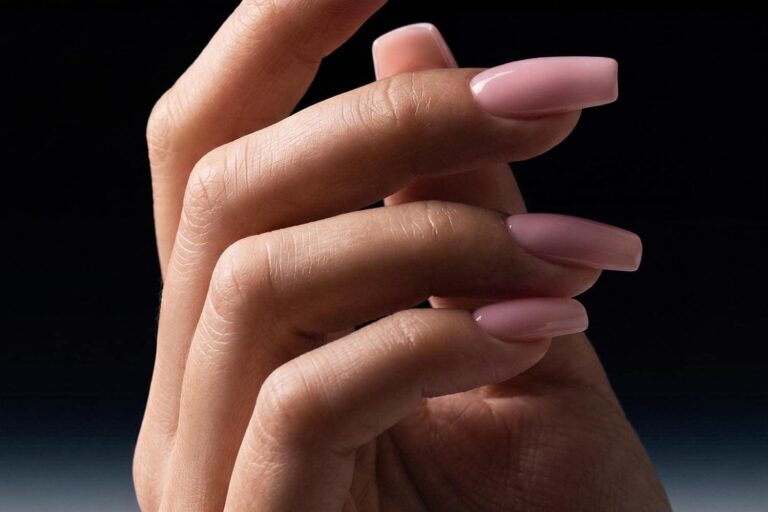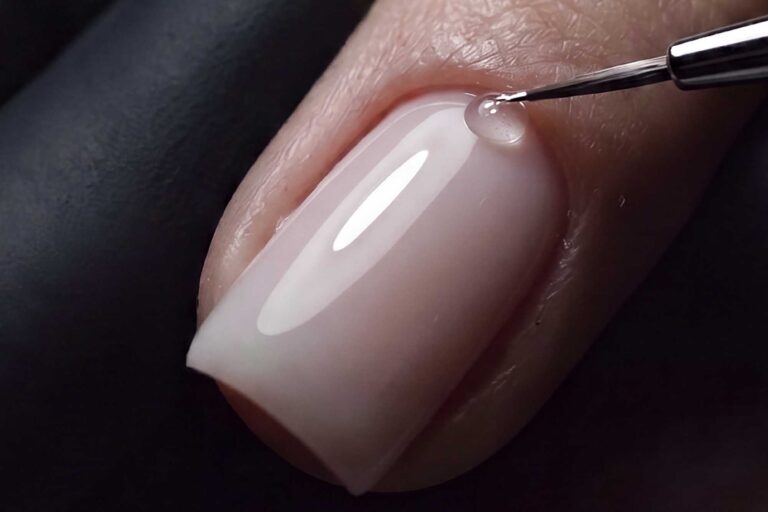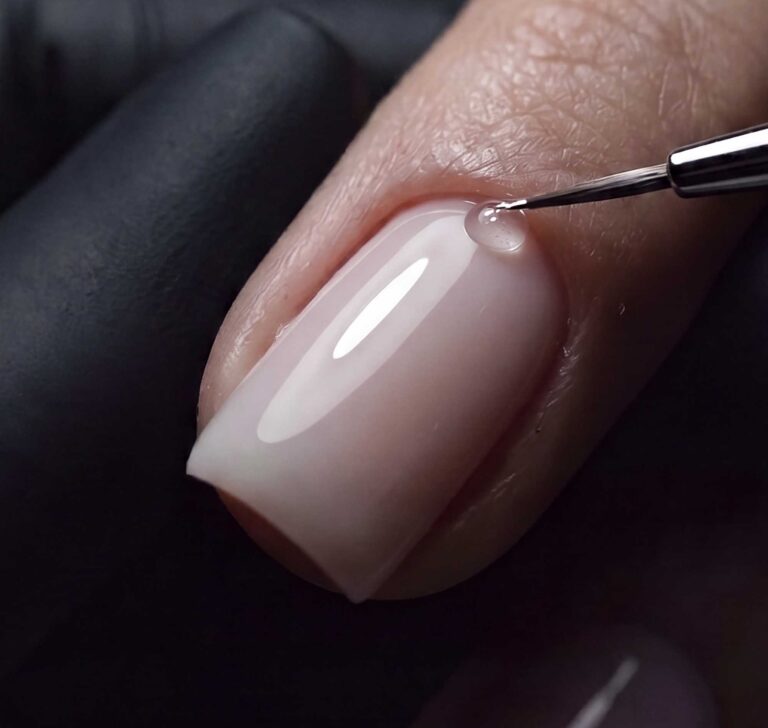
The gel comes off, and there they are: nails that feel thinner, bendier, and a little rougher than you remember. If you’ve ever looked down after a removal and wondered what happened, you’re not alone. The good news is that nails recover — reliably — when you give them the right conditions. The better news is that most of what helps is simple.
This guide covers why nails feel weak after gel, how long recovery actually takes, and the habits and choices that make the biggest difference — including a few things we do differently at The Shade.
Why Nails Feel Weak After Gel
Gel polish itself is rarely the culprit. The damage usually happens in two places: aggressive removal and over-filing. When gel is peeled, picked, or pried off, it takes the top layers of the nail plate with it. Rushed removals that involve heavy scraping do the same thing more politely. Repeat that across back-to-back appointments and the plate gradually thins.
The other factor is dehydration. Long acetone soaks, hand sanitizer, dish soap — all of it strips moisture from the nail. A dehydrated nail is a brittle nail, and brittle nails peel, chip, and split long before they break cleanly.
How Long Does Recovery Take?
Here’s the part nobody loves hearing: a damaged nail plate doesn’t heal. It grows out. Fingernails replace themselves slowly — over a period of months, not weeks — which means the thin section moves toward the tip as healthy new growth comes in at the base. Most people see a noticeable difference within six to eight weeks; a full reset takes longer.
Keep that timeline in mind when you shop. No polish, serum, or supplement rebuilds a thinned plate overnight, and anything that promises to is overpromising. What products can do is protect the nail you have while the new growth arrives.
Step One: Get the Removal Right
Strong nails start with how gel comes off, not what you put on afterward. A few non-negotiables:
- Never peel or pick gel off, even when it’s lifting at the edges. That satisfying sheet of polish takes nail with it every time.
- Let a professional handle removal whenever possible. A trained tech can take product down with an e-file without ever touching the natural nail.
- If you must remove at home, be patient. Rushing the process is how scraping damage happens.
At The Shade, removal is done dry with a precision e-file — the same careful technique behind the dry manicure itself. No prying, no gouging, no shortcuts.
Rehydrate Before You Rebuild
Once the gel is off, moisture is your first project. Cuticle oil, applied daily, does more for post-gel nails than almost any specialty product — it conditions the nail plate and the skin around it, keeping new growth flexible instead of brittle. Jojoba-based oils absorb particularly well. Follow with a rich hand cream and you’ve covered the fundamentals.
One caution: be choosy about nail hardeners. Some rely on formaldehyde-type ingredients that can make nails feel harder at first but more brittle over time. If clean formulas matter to you, our guide to non-toxic nails in NYC breaks down what to look for on a label.
Daily Habits That Speed Things Up
Recovery is mostly the sum of small, boring decisions made consistently:
- Keep nails short while they regrow. Less length means less leverage, and less leverage means fewer breaks.
- File in one direction with a fine-grit file rather than sawing back and forth.
- Wear gloves for dishes and cleaning. Detergents and hot water are quietly brutal on weakened nails.
- Stop using your nails as tools. Tape, stickers, soda cans — reach for something else.
- Apply cuticle oil at night so it can absorb undisturbed.
Do You Need to Take a Break From Gel?
Not necessarily — and this surprises people. If your nails are thin because of rough removals, the fix is better removals, not abstinence. A thin layer of properly applied gel can actually protect a fragile nail from everyday knocks while it grows out. It comes down to condition: if the plate is severely thinned or peeling, a few bare weeks with diligent oiling is worth it. If the damage is mild, well-done gel on a sensible schedule is perfectly compatible with recovery.
Spacing appointments helps too. Understanding how long a gel manicure lasts lets you book at the right rhythm instead of removing product earlier than you need to.
Why a Dry Manicure Helps Weak Nails
Water is the overlooked variable in nail strength. When nails soak, they swell; when they dry, they contract. Polish applied to a swollen nail adheres worse and lifts sooner, which leads to — you guessed it — earlier removals and more of them. A fully waterless service sidesteps that cycle entirely.
That’s the philosophy behind everything we do at our SoHo studio: no soaking bowls, no water, cleaner formulas, and meticulous e-file work that removes product without thinning the nail beneath it. For nails in recovery, it’s the gentlest professional option we know of.
When to Ask a Professional
Most post-gel weakness resolves with time and good habits. But if you notice persistent splitting, deep ridges, discoloration, or pain — or if your nails aren’t improving after a couple of months of consistent care — it’s worth checking in with a dermatologist. Nail changes occasionally signal something beyond cosmetic wear, and a professional opinion beats guessing.
Ready for a Fresh Start?
Stronger nails are a process, but you don’t have to manage it alone. Book a fully dry, waterless manicure at The Shade in SoHo and let our technicians assess where your nails are — then build a plan to get them where you want them.