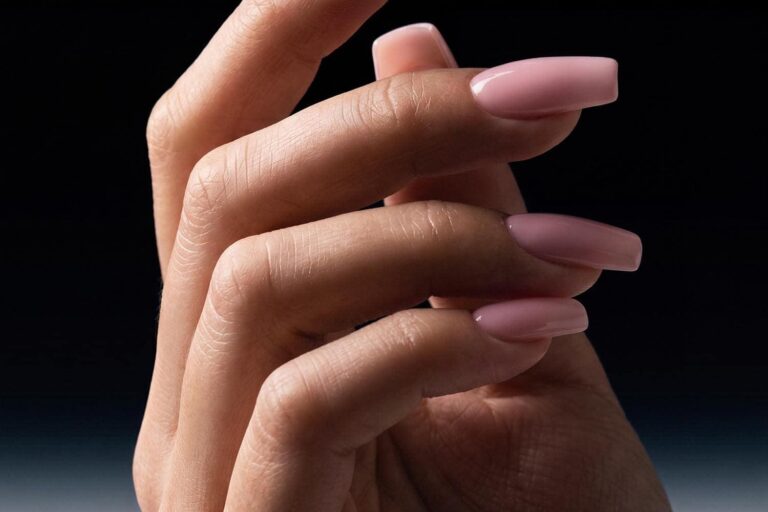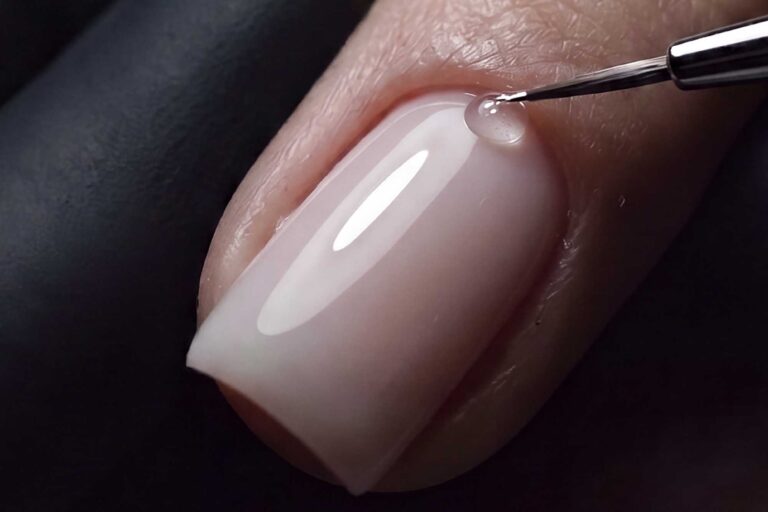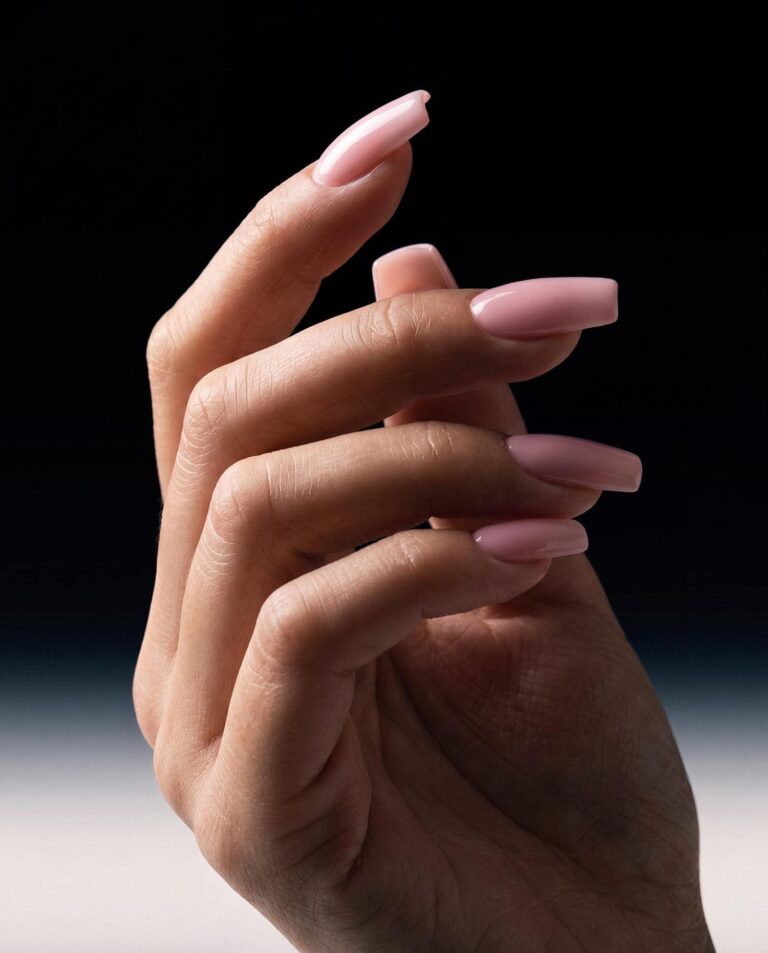
Press-on nails have shed their reputation. What used to be a drugstore compromise is now a genuinely good product: better shapes, better adhesives, better finishes, and a price that makes sense for a single event. Plenty of people who sit in our chairs also keep a set in a drawer, and we think that is entirely reasonable.
Still, press-ons and a gel manicure solve different problems. Understanding which problem you are actually trying to solve saves money, time, and occasionally your nail plate. Here is an honest comparison.
The short answer
Press-ons are excellent for short-term, high-impact moments where you want a specific length or shape immediately. A gel manicure is the better choice when you want weeks of uninterrupted wear, a finish shaped to your own nail, and a process that leaves your nails in good condition afterward.
Most people are best served by knowing how to use both well, rather than declaring loyalty to either.
Wear time and reliability
This is where the gap is widest.
Press-ons applied with adhesive tabs last a few days at best. Applied with nail glue, a well-prepped set can hold for a week or two, though usually with at least one casualty along the way. They tend to fail suddenly rather than gradually, which is the real issue: a nail that pops off mid-dinner is a different kind of problem than a gel manicure that has gone slightly dull at the tips.
A properly applied gel manicure wears evenly and predictably. It grows out rather than falls off. Our guide to how long a gel manicure lasts covers realistic timelines and what shortens them.
Fit and finish
Press-on sets are manufactured to standard sizing. Even good sets require you to pick the closest match from the tray, and most people have at least two or three nails that sit slightly wide or slightly narrow. That gap at the sidewall is where water, product and lint collect, and it is also where a lift usually begins.
A gel manicure is applied to your nail, which means the shape follows your actual nail bed, the cuticle line is clean, and the finish sits flush. Nothing catches on fabric. Nothing looks borrowed.
A note on length
Press-ons win on instant length. If you have short natural nails and want a long almond shape tomorrow, a press-on set gets you there immediately and inexpensively. Gel extensions can also do this, with a far more natural result and real structural strength, but they are a service rather than a purchase.
What each one does to your natural nail
This is the part worth reading carefully, because the damage people blame on gel is usually caused by something else.
- Press-ons are rarely the problem. Removal is. Prying a glued tip off takes surface layers of your nail plate with it. Repeated over several sets, this produces the thin, bendy, white-patched nails people describe as ruined.
- Gel is rarely the problem. Over-filing is. A heavy hand with an e-file or a coarse buffer before application thins the nail before the polish ever goes on.
- Both are fine when removal is patient. Soak, wait, and let the product release. No scraping, no peeling, no shortcuts.
If you have been rebuilding after a rough stretch, our guide to keeping nails healthy between manicures is a good place to start. And if you notice persistent pain, discoloration, separation of the nail from the bed, or any change that does not grow out, speak with a dermatologist rather than covering it.
The prep difference nobody mentions
Whether you are applying press-ons at your kitchen table or sitting for a gel service, the same principle governs whether it holds: adhesion needs a clean, dry nail plate.
This is exactly why we work waterless. Soaking swells the nail and the surrounding skin, so anything applied afterward is bonding to a surface that is about to change shape as it dries down over the next few hours. It is a small detail with an outsized effect on how long a manicure lasts. Our explainer on what a dry manicure is lays out the full method, and the same logic is why we do not use water bowls for pedicures either.
If you are doing press-ons at home, borrow the principle: skip the soak, push back cuticles gently when dry, remove surface oil, and size each nail individually rather than eyeballing the set.
Cost, honestly
Press-ons are cheaper per set. That is not in dispute. What shifts the math is frequency and failure rate. A set worn for four days, replaced twice in a month, with a repair kit and a tube of glue in between, is not as economical as the sticker price suggests. A gel manicure booked every few weeks is a larger single line item and a smaller ongoing one.
There is also the cost of your time and attention. Reapplying a nail during a work day has a price, even if it is not on a receipt.
When to choose which
Choose press-ons when:
- You need a dramatic length or an elaborate art moment for one night
- You are between appointments and want something in the interim
- You want to try a shape before committing to it in studio
- You are traveling somewhere you cannot book
Choose a gel manicure when:
- You want weeks of wear you do not have to manage
- Your hands are visible at work, on camera, or at an event
- You want a finish shaped to your own nail, with a clean cuticle line
- You are recovering nail health and want product applied and removed properly
- You care about what is in the formula and how the room is cleaned
If you are comparing studios, our roundup of where to get the best gel manicure in NYC is a useful starting point, and it is worth asking any studio directly about their sanitation and their polish lines before you sit down.
The takeaway
Press-ons are a good product used for the right reason. A gel manicure is a service, and the value of a service lives in how it is performed: the prep, the restraint, the removal, and the formulas chosen for what they leave out as much as what they deliver.
When you want the version that lasts, book with us. Our SoHo studio offers fully dry manicures and pedicures with cleaner polish, sterilized tools and no water bowls anywhere in the process. Reserve your appointment and let your nails grow out stronger than they came in.