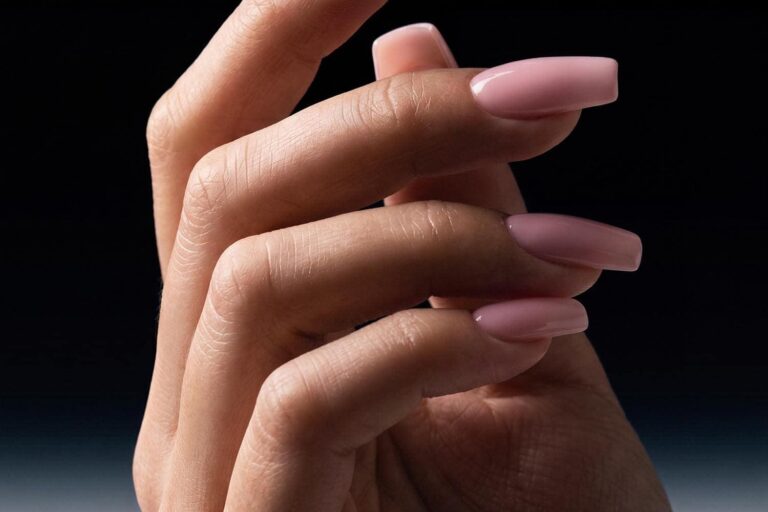
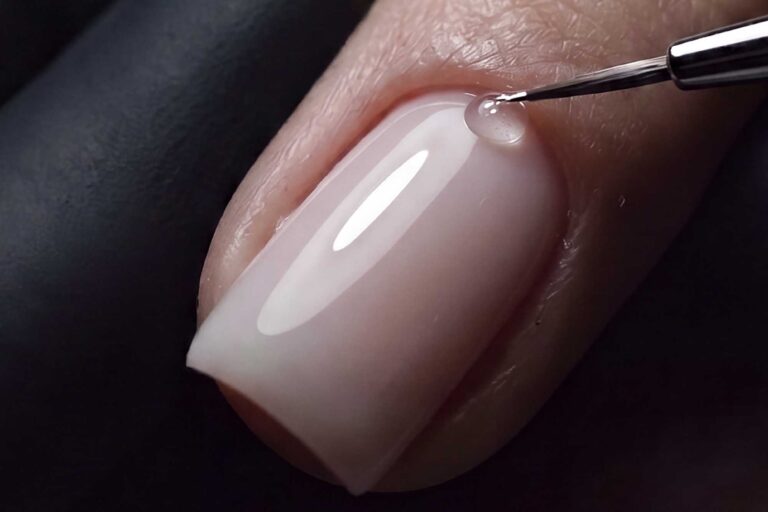
Every gel manicure ends the same way: your hand slides under a small lamp, thirty seconds pass, and the color is set. It is the least glamorous moment of the appointment and the one clients ask us about most. The question tends to arrive quietly, somewhere between the base coat and the second coat of color: are UV nail lamps safe?
It deserves a real answer rather than a reassuring one. Here is how the lamps work, what the research has and has not established, and the small adjustments worth making at your next appointment.
What a UV Nail Lamp Actually Does
Gel polish is not polish in the way traditional lacquer is. Lacquer dries by evaporation: the solvents leave, the pigment stays, and the finish hardens in open air over roughly twenty minutes. Gel does not dry at all. It cures. Ultraviolet light triggers a chemical reaction that links the gel into a hard, flexible film bonded to the nail plate.
No light, no cure. That is why a gel manicure is touch-dry the second you stand up, and it is also why the lamp is not an optional step a technician could simply skip. Each layer is cured individually, usually for thirty to sixty seconds. Across a full set, your hands spend a few minutes under the light in total.
UV Versus LED: The Names Are Misleading
Most modern studios, ours included, use what the industry calls LED lamps. The name implies a different category of light. It is not. LED lamps still emit ultraviolet light. They simply use light-emitting diodes to produce a narrower, more targeted wavelength, which cures compatible gels considerably faster.
- Older UV lamps use fluorescent bulbs with a broader ultraviolet output and longer cure times, often around two minutes per coat.
- LED lamps use a narrower band and typically cure in thirty seconds or less.
- Both are ultraviolet. LED is not a UV-free alternative. It is a faster one.
That speed difference is the part that matters. Less time under the lamp means less cumulative exposure across a year of appointments, and cumulative exposure is really the only figure worth thinking about.
What the Research Says, and What It Does Not
Dermatologists and researchers have studied nail lamps for years, and the honest summary is that the picture is incomplete. The broad consensus is that the ultraviolet dose from a single manicure is small compared with ordinary outdoor sun exposure. It is also not zero, and it accumulates for anyone sitting for gel every few weeks over many years.
Some laboratory work has raised questions about cellular effects from repeated exposure to nail-lamp wavelengths. Other reviews have concluded that the skin cancer risk from these devices appears low. Both of those things can be true at once, and neither is a reason to panic or to shrug.
Less disputed is photoaging. Ultraviolet A exposure contributes to the thinning, pigmentation, and loss of elasticity we associate with sun-exposed skin, and hands tend to show that change earlier than almost anywhere else on the body.
We are not dermatologists, and we will not pretend the science is settled. If you have a personal or family history of skin cancer, take medication that increases photosensitivity, or simply have a lingering concern, that conversation belongs with a dermatologist who knows your history rather than with a studio or a search result.
Simple Ways to Lower Your Exposure
None of this requires giving up gel. The practical steps are small enough to become habit.
- Apply a broad-spectrum sunscreen to the backs of your hands about twenty minutes before your appointment. It is the single easiest adjustment.
- Wear fingerless UPF gloves. They cost very little and cover everything except the nail itself.
- Choose a studio using modern LED lamps with short cure times rather than older, slower units.
- Ask. A studio that knows its equipment will tell you exactly what it uses without hesitation.
A Note on Removal
The lamp is not where most nail damage happens. Removal is. Prolonged acetone soaking and aggressive scraping do far more to thin and weaken the nail plate than a few minutes of curing light ever will. At The Shade, gel comes off with a controlled e-file technique as part of our dry manicure process, which keeps the natural nail intact and the surface even. If you are wondering how long a well-executed set should hold before removal comes up at all, we cover that in our guide to how long a gel manicure lasts.
The Lamp Is One Variable Among Several
Focusing only on the lamp distracts from everything else happening at the table. The formulations in front of you, the air you are breathing, and the tools touching your skin all matter, and in a great many salons they matter considerably more.
Our approach is to make the whole appointment cleaner rather than to argue about one device. We work fully dry, with no water bowls or soaking for manicures or pedicures, which removes an entire category of contamination risk. We use cleaner, lower-odor formulations, a longer conversation we unpack in our guide to non-toxic nails in NYC. And every service at our SoHo studio runs on sterilized tools and single-use porous items, because those are the details that decide whether you leave better than you arrived.
So, Are UV Nail Lamps Safe?
Our honest answer: the exposure is brief, the dose is low relative to an afternoon outdoors, and the precautions that meaningfully reduce it take under a minute. For most people, gel remains a reasonable choice, made more reasonable by sunscreen and a pair of UPF gloves. For anyone with a specific medical reason to limit ultraviolet exposure, the right move is a conversation with a dermatologist, not a blanket rule from us.
What we would push back on is the idea that the lamp is the only thing worth asking about. It is one variable in a service with many, and the studios worth your time are the ones happy to discuss all of them.
Ready for a manicure where the questions have already been answered? Book at The Shade in SoHo for a fully dry, considered service with cleaner formulations, modern equipment, and hygiene handled long before you sit down.